Being Choosy

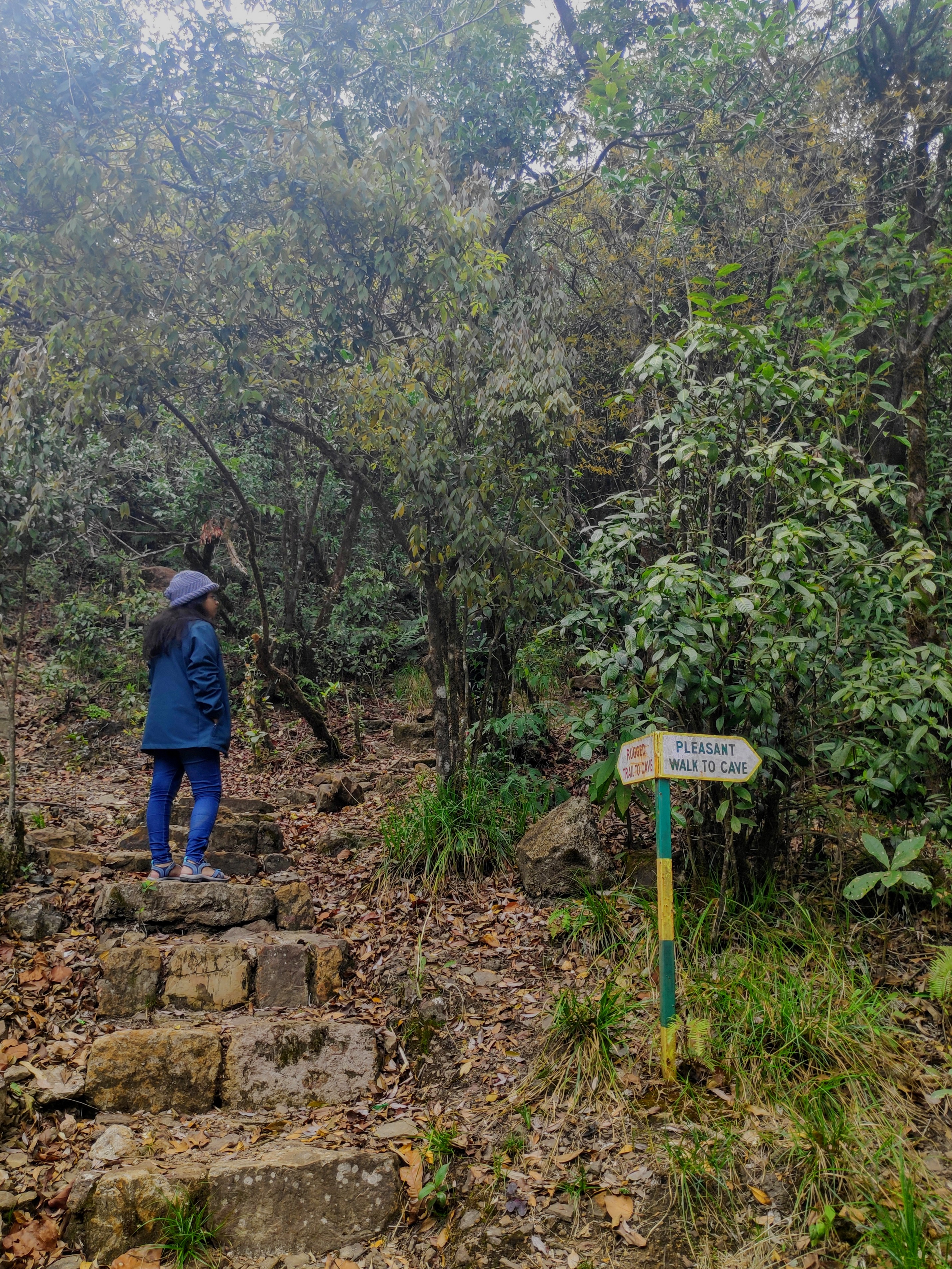
Rugged trail or pleasant walk?

The trouble with making unconventional choices is that no one really knows how much it takes. How much courage, how much introspection and how much uprooting of things you didn’t give a second thought about. When Robert Frost took the Road Not Taken all of us appreciated his pluck; as teenagers he inspired us all to make unique career choices. But looking upon it a few years later, as not a teenager but a youngster who’s running around life, jumping from one task to another what I find even more admirable is that he stopped in the woods, took a moment for himself and recognized that he had a choice and that there was no necessity, no compulsion to keep walking. Recognition and stopping are the key words here. A lot of us know what an immense decision that is; to go against inertia whether of motion or of rest. It requires an active participation in one’s own life, a quality conversation with one’s own self.

I’m writing this post in first person because I recently grappled with this concept and it took the wind out of me in more ways than one. In a recent conversation with a friend who wanted to take an year off to complete her music studies (but wasn’t allowed to for no other reason except that it simply wasn’t expected of a doctor) I realised exactly how dismal the situation of freedom is, when she said that she felt like her own life wasn’t giving her any time. 

This story ends with these few lines. What more needs to be said? There is no greater tragedy than that loss of autonomy. Time and again, in endless narratives of literature and history, the same tale is repeated, although some end on a good note due to a realisation that in this less-than-ideal world, freedom is not given but taken, most end on the same note as my friend’s: with a resigned acceptance of one’s supposed Fate. 

A different story is that of Literature and I. That I was miserable studying medicine was evident enough to me and my friends. But that I could do something about it was recognised only by them. Even though I was simultaneously doing a Bachelor’s in English through an open university, the limited syllabus kept me discontented and the lack of like minded people to discuss and study my beloved subject with made me feel alone. Three years ago my friends told me that I could take time off after graduation to study English in a proper college and after that if I wanted to, I could do an MD in the medicine field. A typical masters course is of a duration of 2 years. And people shudder to take an year off even. For me to get used to that idea, that it wasn’t an utter impossibility took nearly an year and almost daily convincing sessions. There is no sudden moment of epiphany here, I had to take it slow. And at every step I had to recognise the choice I had. Everyone asked me “How the hell?” and I didn’t have a better answer than a shrug of my shoulders. I knew I couldn’t believe in it completely. So to at least further that little belief I had I told more people, I told them that I would do it and then I told myself that I would do it. I kept postponing applying for an actual exam but kept reading almost incessantly. On a night that I couldn’t sleep I prayed for strength and applied to the least daunting entrance exam of all the universities I wanted to get into and wrote the exam with as little confidence as I had initially. One week later, I found out that I got in and that the idea that seemed too far fetched and too radical three years ago turned into my reality. 

I’m still incredulous, I’m still waiting for the epiphany to come and I’m still in disbelief that this is my life. But my ultimate point here is that that is all okay. You don’t have to do everything at once, you don’t have to do everything by yourself. Sometimes it is okay to just stop for as long as you want. It is okay to start with the smallest of steps that make sense for you. It is okay to shock and scandalise everyone by making a choice that is 100% your own. Funnily enough in the end, everyone who didn’t believe you will admire you for going off the beaten track. That is probably the ultimate irony of the society we live in ; we admire the very freedom we try our best not to bestow. 

The nature and norm of any society is to fit in neatly and to do that it tries to cut the sharp and un-uniform edges off of the people that form it. But the very marrow of being human, as Atul Gawande put it, in his “Being Mortal” is to want to retain the autonomy, the freedom to be the authors of our own lives. “Author” is an interesting word that immediately confers power and responsibility over a life. When one becomes an author, all sorts of choices open up, the most trivial things become an active decision, from one’s name to where to live, what job to do, what relationships to form, what to eat, what battles to fight, what to let go of, how to spend a weekend, how to die, anything and everything. All these choices hide in plain sight for all of us too. We only have to stop and recognise them for what they are to change our stories for good.
Badass


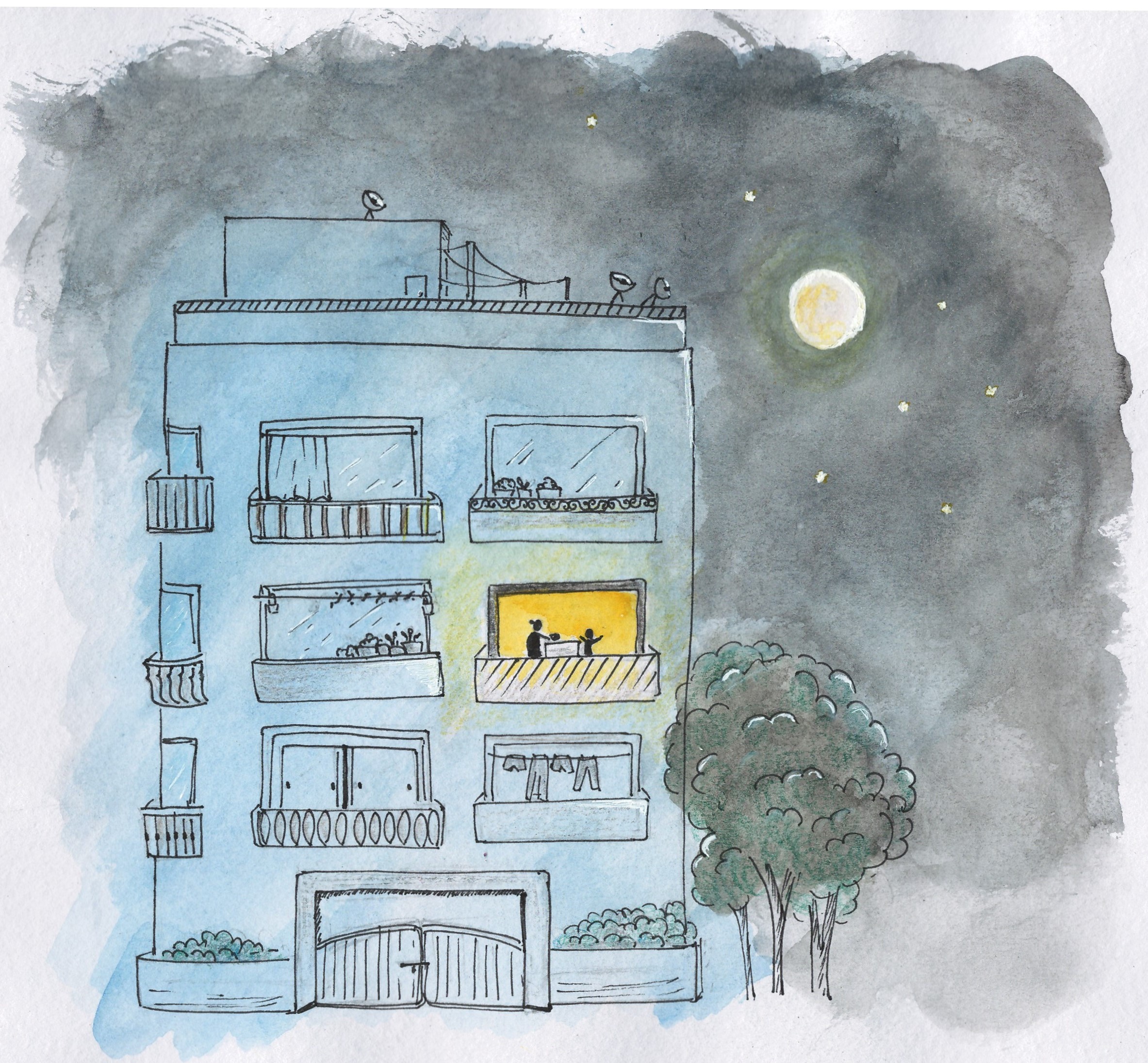
There was an eerie silence in the afternoon at our house. It was only 2 pm but the hall was dark, the curtains were drawn and the only active, glowing member of the house was switched off. Restlessly I walked around; went to the fridge for the 10th time to find only disappointment, I had gone through my fifth cup of tea so that wasn’t an option. The faint hum of the Shiva Tandava Stotram reached my ears as I walked past my parents’ room. I went in knowing I wasn’t going to get any attention, wandered for a while, looked at my mother without saying anything. An involuntary sigh left my being as I realised I didn’t want to stay there. The beige sofa to the wall of the main balcony was nearly invisible in the dark, so was my grandmother sitting to its corner. It was easy for her to become invisible. She woke up earlier than the rest of us, made tea for her husband of 70 years, swept the house (like a preliminary round before the maid came in the afternoon), planned our breakfast; all this without a single sound. She once told me that the mark of a good woman is to go about her work without noise. I was a kid then, newly curious about cooking, especially (actually only) the part where we mix the contents in the vessel around with a large spoon-like thing. I made as much noise as possible, purposefully beat the spoon on the vessels’ side and screamed in delight as she gently took it away from me and told me that the men in the house must not know that cooking was happening in the house. I thought then that she was wonderful. That she could do so much without making a mess. I was her opposite. I used to go about the house hopping, playing with the tiles, stamping around to the rhythm of whatever song was playing in my mind at the time. I used to sing loudly in the shower, for everyone to hear and appreciate. Whatever step I learnt that day had to be performed in front of the rest of the family, to applause and a standing ovation. I never studied quietly either, I never wrote notes in a small 100 pages classmate notebook. I stole the chalks my grandma used for the muggu in front of our house and scribbled on the door of entire wardrobe and refused point blank to erase them. When guests came they used to admire my handiwork and often told my father what a hardworking child I was. I used to eavesdrop and feel elated. I had a crush on many guys and sung in their memory. I kept no secrets. 

There was a rubber band on the table in front of this sofa. My wild hair was irritating my neck so I went to grab it when suddenly the sofa moved. I jerked back, startled. And saw that my grandma just got up from there. I looked at her and she looked back at me. I sat her back drown, crouched on the carpeted floor and put my head on her lap, clutching her cotton, soft saree and making and unmaking folds on it again and again. She didn’t speak a word. After a while we both got up, I went back to studying not feeling so restless anymore and she had decided that I needed dosa.

I sat in front of the book and stared at it for awhile. She came inside timidly, placing a plate on my bed and asked me how contacts are saved in a phone. 

“Let me just do it for you. Which one?”

“No just tell me, you must have a lot to study..,” she trailed off.

Both of us were well aware that teaching her would take more time. 

“Here, first click this button in the centre. Then this star shaped button at the bottom. It gets unlocked. Then the number.. What is it? See, you just have to type in the number. After this click the left side button. Go down, click “new contact.” Now what’s the name? Okay, for p press the button nine once. For s three times, but quickly. You see, the letters on top of the numbers; their order tells you how many times you have to click it. But remember to click fast, okay? Here, you try one now.”

She smiled like a school girl as she attempted her first one. After her first “saved” tick had come she giggled gleefully and sat down with her ancient pocket notebook in which the numbers of our entire village were written and spent the next hour in extreme concentration. She stood nervously as I read her phonebook aloud. “Poojitha” became “Putspru” and “Santosh” became “Samptg.” We laughed until I fell on the floor. “See?,” I said, “You’re perfect.” No one could get their way around her mobile but her and I. It  became our joke, our secret.

I was PMSing one day when only she and I were at home. I was in a severe need of ice cream with no money. When I asked her, she said that she didn’t have any. Looking down she explained, “I forgot to ask your grandfather before he left.. And I don’t know where we keep the money in this house.” I’d never forget the tension of shame that was present in the air at the time. I knew then, her streak of pride, her independence. The utter and complete humiliation of her present life. The life she had been leading since she was 12 years old. I understood why I cant ask for help comfortably either. We were quite alike. She was the best student in her school, she had a natural inquisition about science, she loved to calculate, she abhorred superstition and disapproved of many of my mother’s religious beliefs. She allowed me near the prayer room when I had my period. She was married off to a guy who became a school headmaster, a respectable one, a renowned one, but one who hadn’t allowed her to continue.

Today, she cooks for him, she serves him because he wont let anyone else, she teaches him how to save contacts on his phone, repairs the television for his evening news, talks to her sons abroad on face time and learns new recipes on youtube. She learns craft. She makes new muggus for the front of the house and teaches them to me with the patience of a mother. She listens to me talk about my studies, about the cases I see in the hospital, asks me questions and tries to understand. She takes long walks with her companions in the garden and on coming back silently sits on that beige sofa, massaging her right knee, without even the faintest moan. She eats milk bread with warm milk at night but only after all of us have eaten and are nearly asleep so that we don’t notice that she cant eat anything else. That her right hand is on her jaw and she’s wincing with pain while she chews. 

Her eldest son grew up and bought her a car to roam around in. She liked taking the Kondapaka bus that left from Jubilee bus station at 6 o clock in the evening, like the rest of her friends. Later, her eldest son grew richer, he now had three cars. One which his daughter had to use. She liked taking the auto with her two friends who lived close by. Both of them though, remained silent. Women, make no noise. 

A few years later though I wasn’t quiet. I had had enough. I couldn’t stay at home on Thursdays and Sundays and holidays. I needed to explore. I needed to not care what anyone would think. I rebelled against the car. I fought everyday. And everyday she would come to my room and ensure that I was okay and had slept. I won; after a few weeks, I won. I got to go in bus. I got to stay out late. I wore sleeveless clothes and one-piece dresses. No one at home liked me anymore, no matter what grades I got, or how well I could dance. I came back home everyday to suspicious and often malicious questions regarding my whereabouts and habits. I wept myself to sleep on many days. One day, things got really out of hand. My parents had discovered the journal I hid under my clothes, and read it while I was away at school. I was 15 and in love with a boy in our class. I also was discovering then that I wanted to study arts instead of science. When I came home, my parents were sitting ready for me on the sofa with a furious hatred burning in their eyes. I was condemned to death and sent to bed.

A few hours later, I found myself staring with red, wet eyes at the ceiling fan, unable to eat or sleep. 

After a while I heard a sweet, out of tune singing of the stotram outside my room; it was 12 am, the lights were still on, the curtains wide open, cool breeze coming in from the rainy night. My grandma was sitting on the sofa, singing from a book of devotional songs. Her feet were on the table, she was clutching her knee. I sat down and massaged her leg for awhile. She didn’t pull away. After a few minutes in silence she asked,

“You didn’t eat, no? I also didn’t. Come lets go and make something. I’m tired of milk.”

I didn’t say anything, I might have cried, for it felt like I heard her for the first time and she sounded like the sweetest person I knew. Simply, I followed her into the kitchen. 

“Shall we make poha?”

I nodded. 

She cut the onions and added the garlic paste whose smell I loved so much. I stood on my toes and bent forward into the vessel to take it all in, as she laughed and handed me the spoon-like thing to mix.

“What are you doing, like some mouse only! Mix it properly!”

“What about the noise?” 

“Picha light,” she said, with a mischievous glint.  

Boggart

"Do not open the lid!", I say
Frantic and furious 
But it opens anyway
from a dark tunnel
Comes a dark shape 
It screams at me
In a language I do not understand
It grabs at my body
It looks at me,
with the eyes of someone once dear
It shakes me, and pleads
In infantile jargon
In infantile jargon it shows me
My truth.
I did not know what to do then- Now-
I take a stick 
Jab the tunnel
Again and again and again.
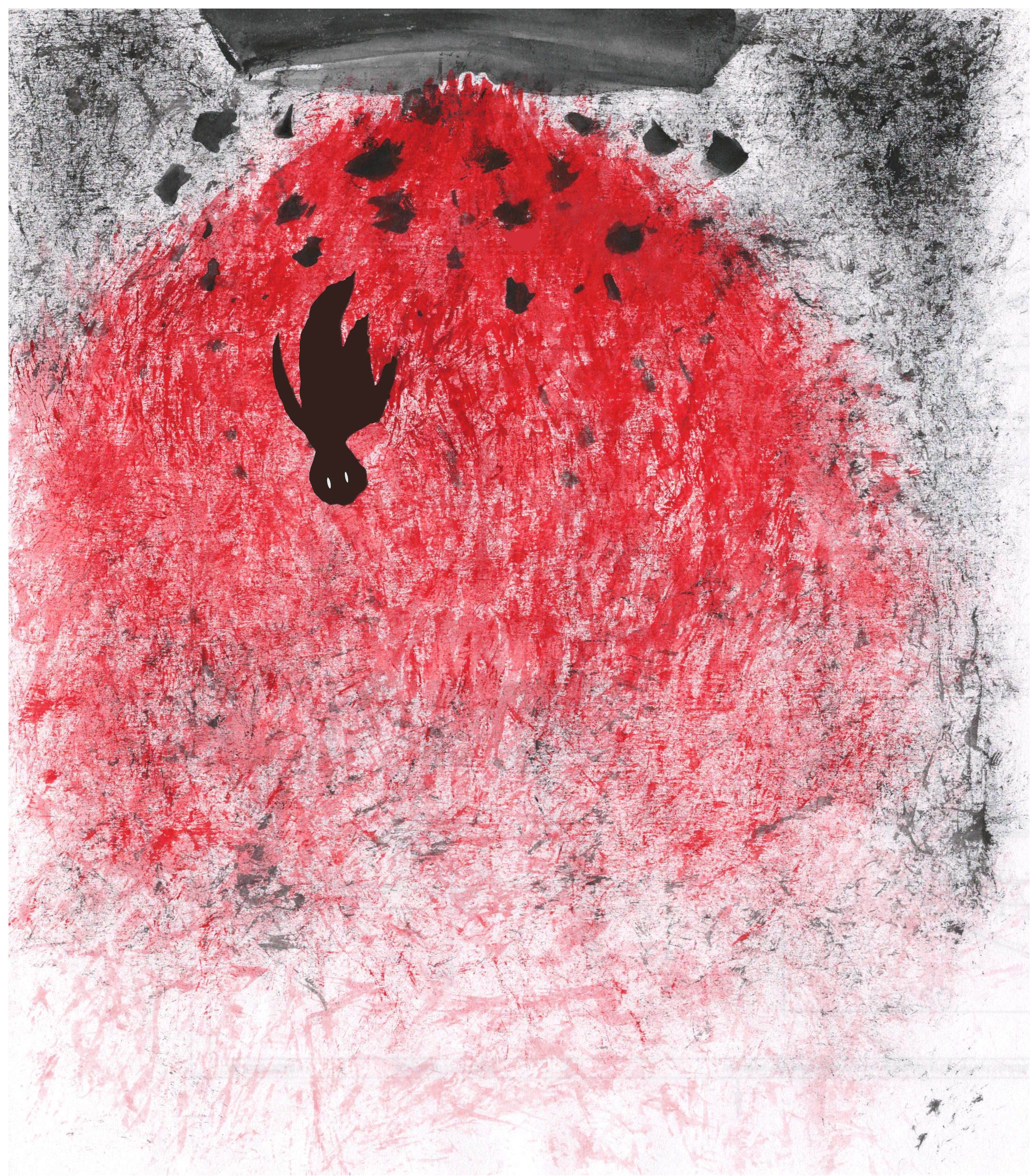
The lid bursts and my boggart
Becomes a sanguine mess.


I am sorry mate,
         We killed your friend.
Standing there he was,
          Beside you since the plague.
I am sorry mate,
         We had weapons 
Made of his own ancestors,
         A neighbour of your own inmates.
I am sorry mate,
         We cut him straight across 
Down, before you knew.
          Arms and legs coiled, shriveled.
I am sorry mate,
          But don't  you worry
Use all of him has found.
          Fragrances and furniture, soaps and sails are all him.
I am sorry though mate,
          This productivity replaces none of your loss.
Friend, Brother and God;
           Through thick and thin, drought and flood.
I am sorry mate,
           Everything now is different
Rain's scanty, it's aroma deficient.
           Soil cannot hold itself , so can't your grief.
I am sorry mate,
           Really, truly. Accept just this one condolence
Your pain is but of short duration,
           Tomorrow you will be productive too.